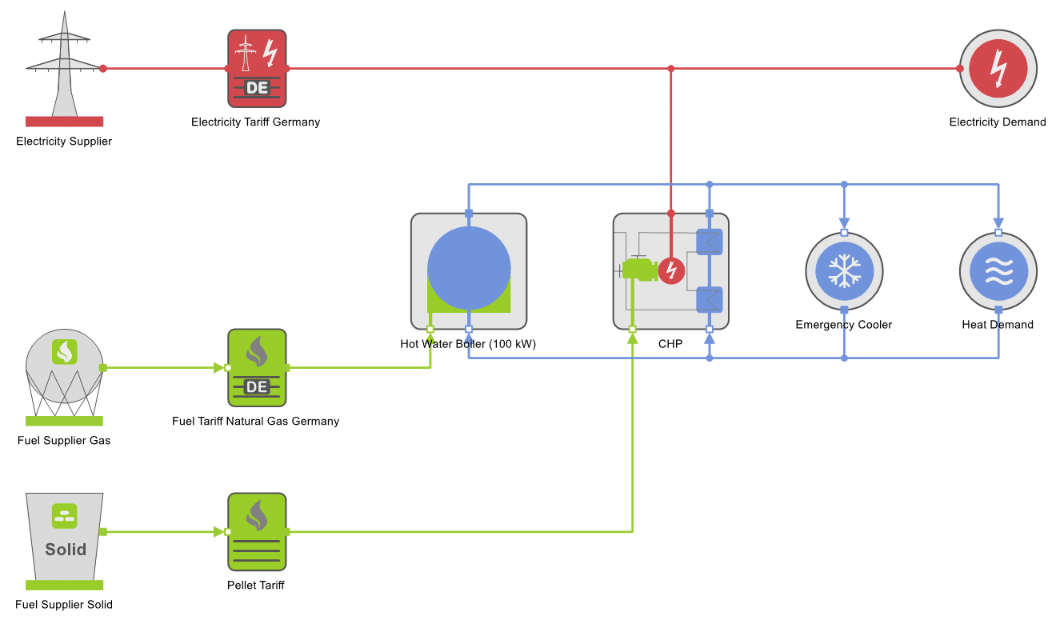
In this tutorial, different operating modes of a CHP unit are compared with each other. In the reference case, there are two classic hot water boilers. In each of the variants, one of the two hot water boilers is replaced by a CHP unit operated with pellets. Each variant realizes a different mode of operation.
Reference Case
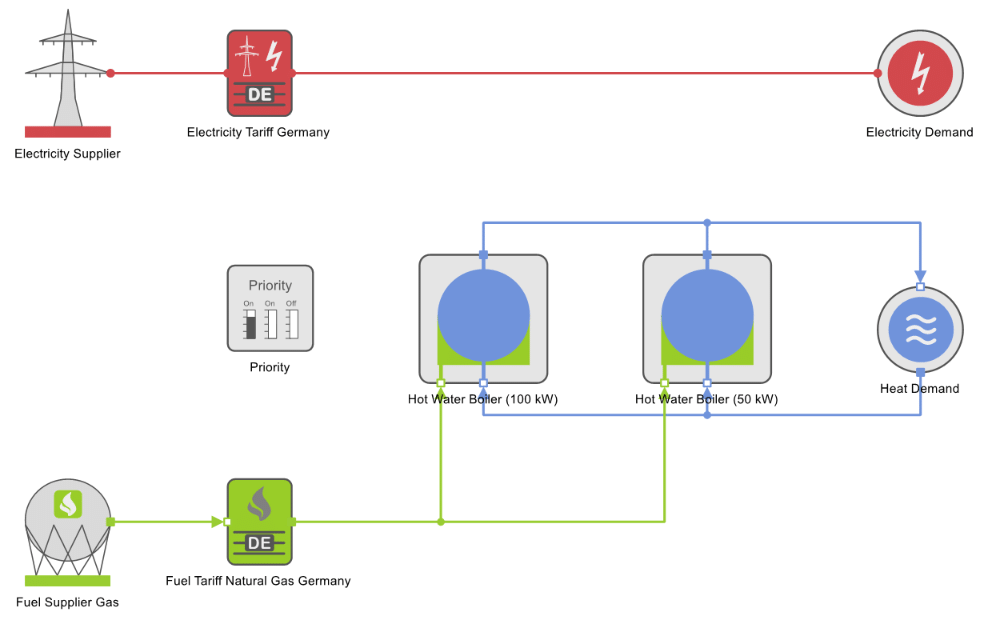
The Priority component first switches on the boiler (100 kW). The boiler (50 kW) is switched on only when necessary to meet the heat demand. The electricity is purchased on the market.
CHP Heat Controlled
In this variant, the CHP is heat controlled, which means that the output of the CHP is adapted to the heat demand, so that no emergency cooler is required to dissipate excess heat. In the electricity controlled and operation optimized variants, on the other hand, there is the option of dissipating excess heat via the emergency cooler. The excess electricity generated is sold on the market.
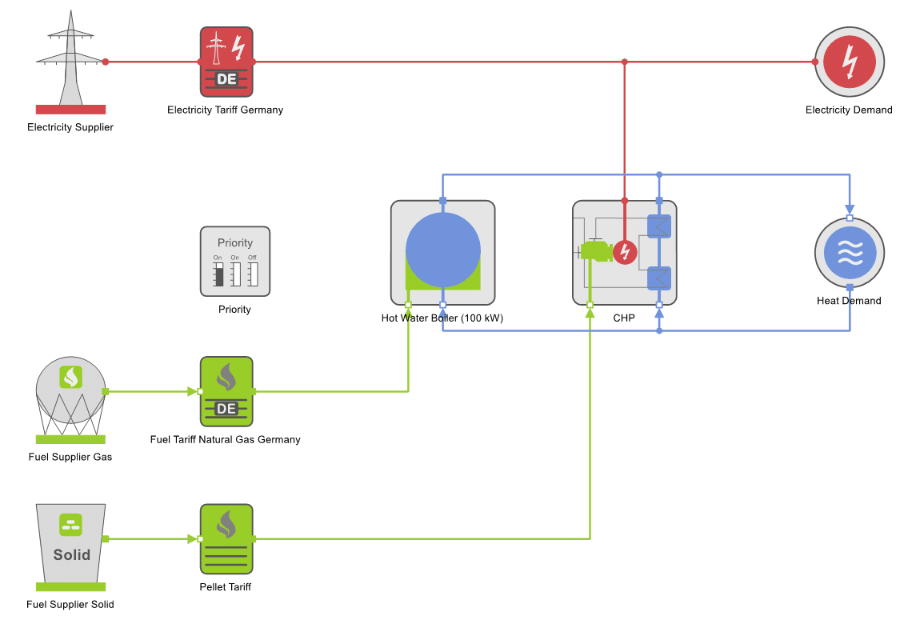
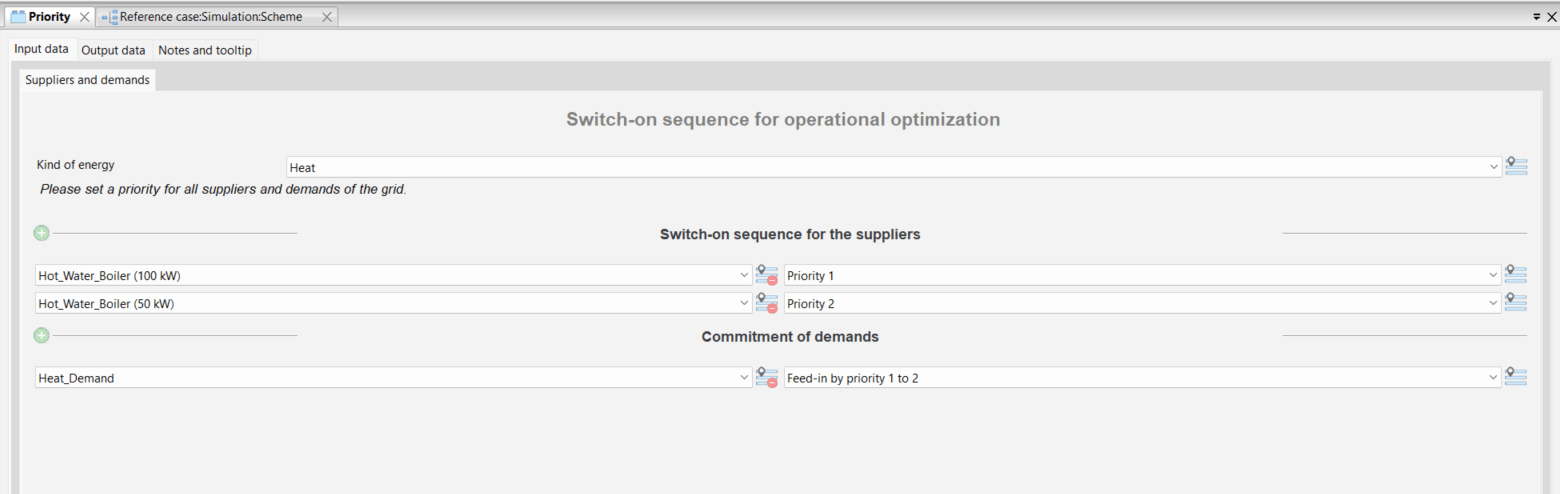
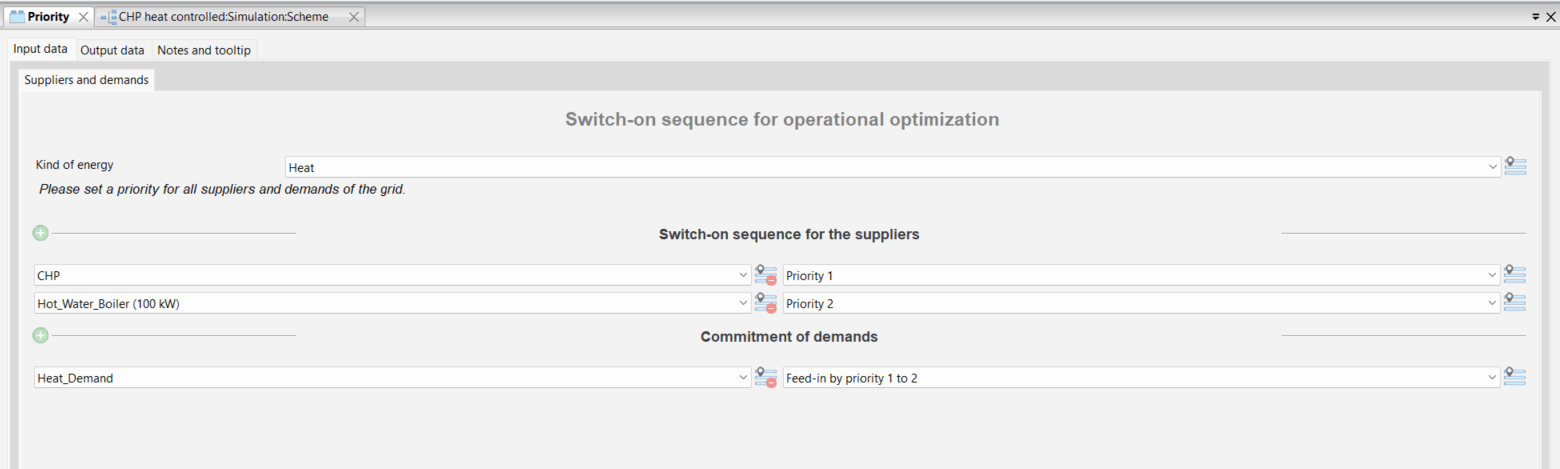
The boiler and the CHP are operated via Priority. The CHP has priority 1, the boiler priority 2.
CHP Electricity Controlled
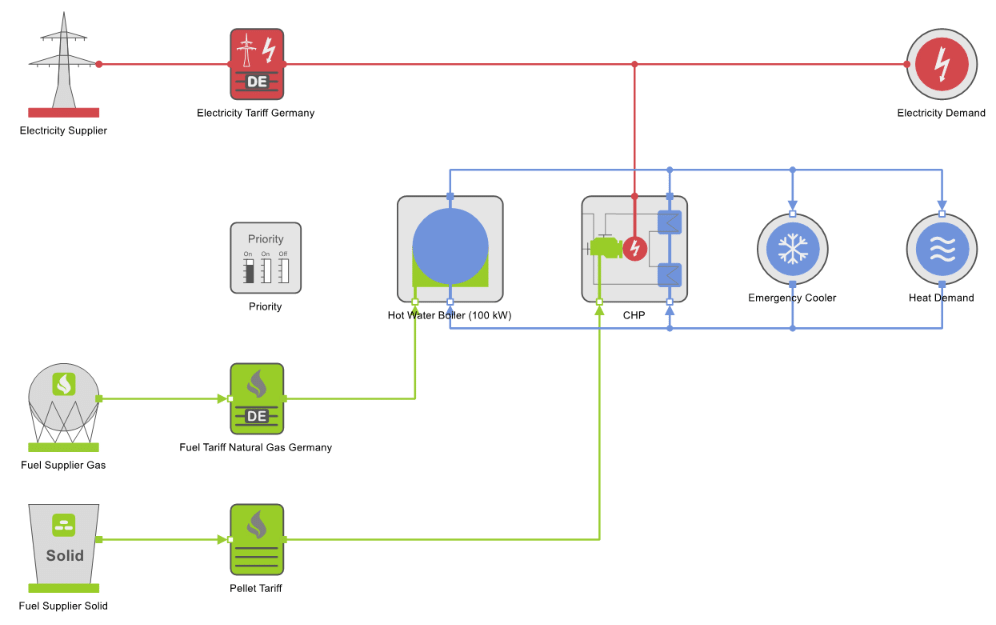
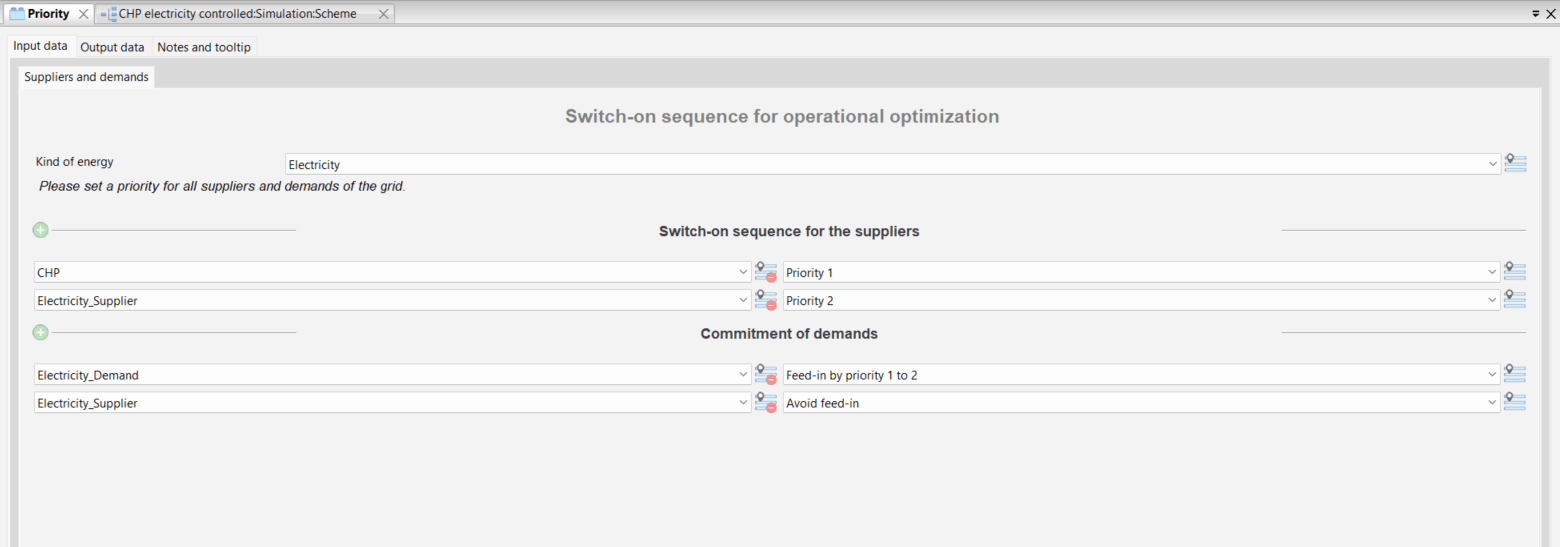
In the electricity controlled variant, the operating mode is based on the course of the electricity demand. An emergency cooler dissipates the excess heat.
CHP Operation Optimized
In this variant, the component Priority is not used, but the operation mode of the boiler and the CHP unit are optimized based on the operating costs.
The CHP unit can generate a maximum amount of heat and electricity. Surplus electricity is fed into the grid.