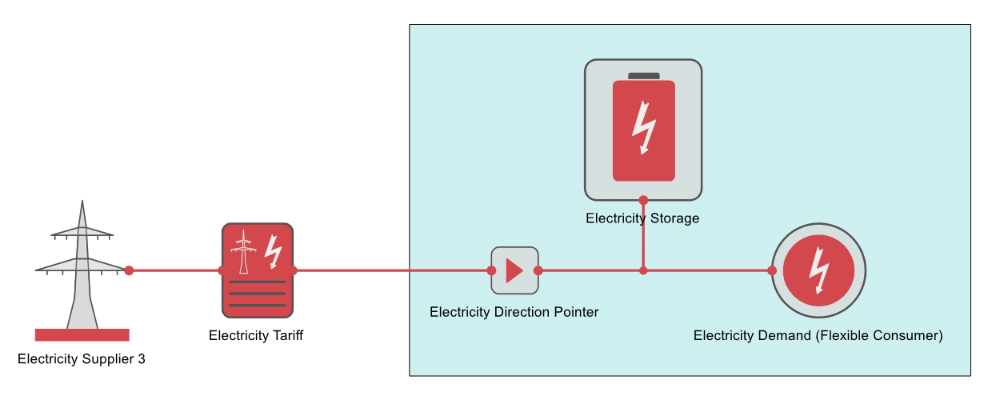
This tutorial demonstrates several typical use cases for simple programmable controls.
Variant 1
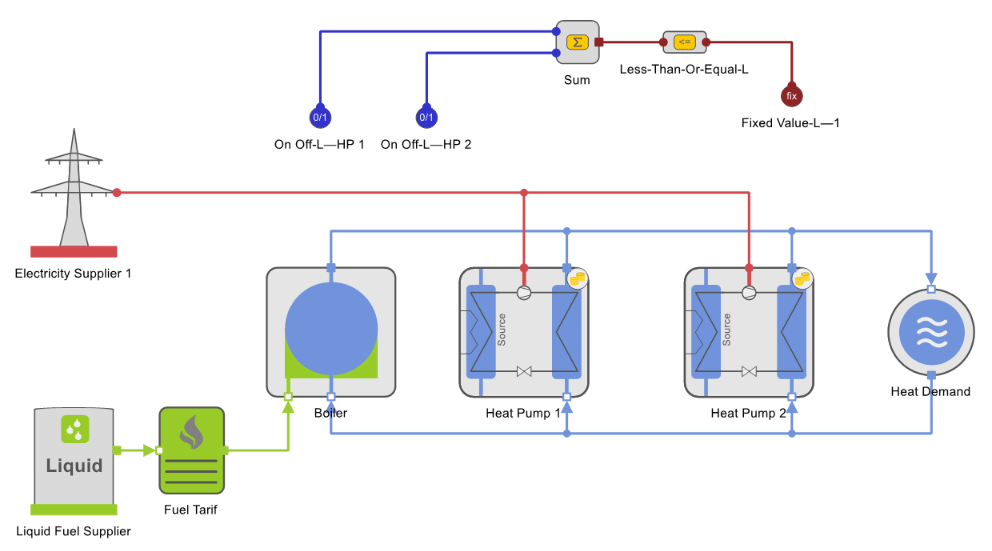
In the first scenario, the operation of two systems is interlocked: only one of the two may be running at a time.
1a) Either-or Plant Configuration—Only One Plant May Be Running at a Time
Control
The binary variable for operating a heat pump can only take the values 1 or 0 (on or off). The sum of both on/off variables must be less than or equal to 1.
Result
Although operating the boiler is more expensive, only one heat pump is operated at a time. For demonstration purposes, Heat Pump 1 has operating costs that are partly negative and partly positive. In addition, the fuel costs on the first day are negative.
1b) Either-or Plant Configuration—Exactly One Plant Must Be Running
Control
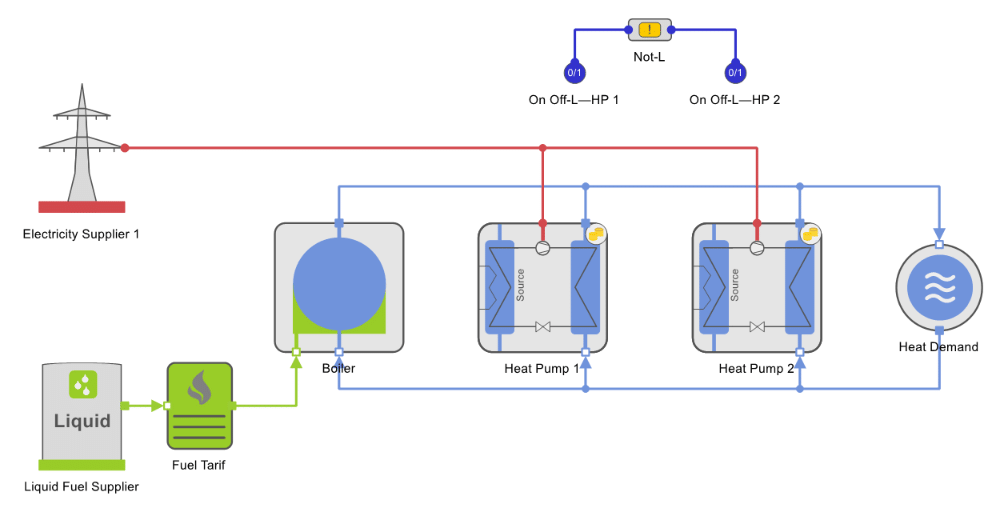
The binary variable for operating a heat pump can take only the values 1 or 0 (on/off). One binary variable must be 1, and the other must be 0.
Result
Although operating the boiler is more expensive, only one heat pump is operated at a time. For demonstration purposes, Heat Pump 1 has operating costs that are partly negative and partly positive. In addition, the fuel costs on the first day are negative.
Variant 2: Minimum Storage Filling Level
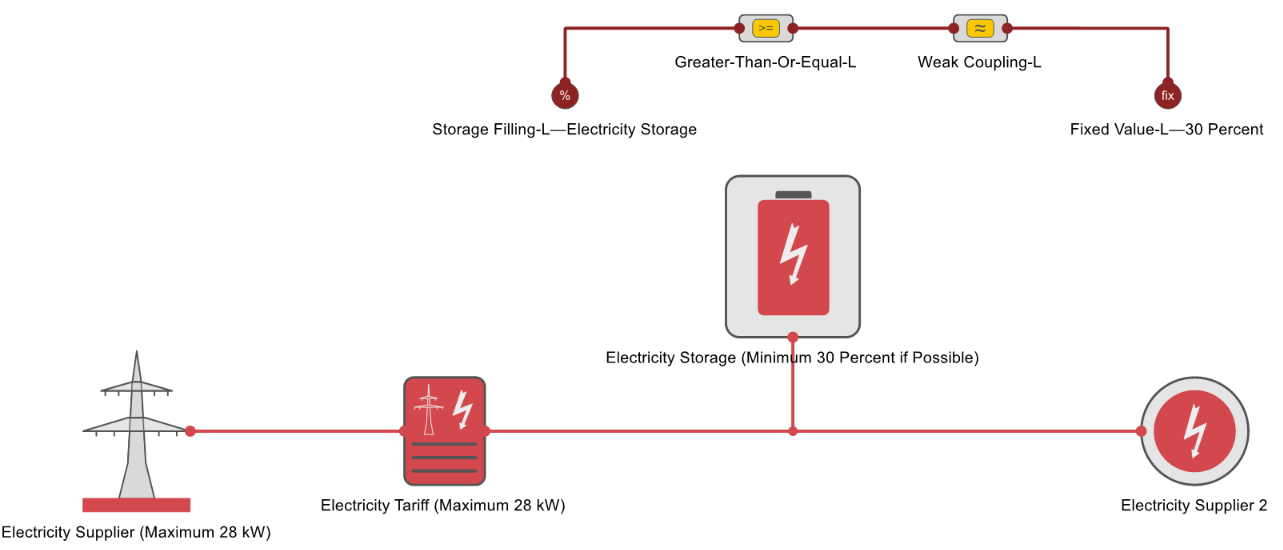
In the second scenario, a minimum filling level of 30 % should be maintained if possible. However, if absolutely necessary, the level may fall below this minimum.
Control
The storage level should be greater than or equal to 30 % if possible.
Result
The battery system maintains a minimum level of 30 % unless it must discharge to meet power demand.
Variant 3
The third scenario involves a flexible consumer that must consume a specific amount of energy within 24 hours.
3a) Flexible Consumer—Amount of Energy per Calendar Day
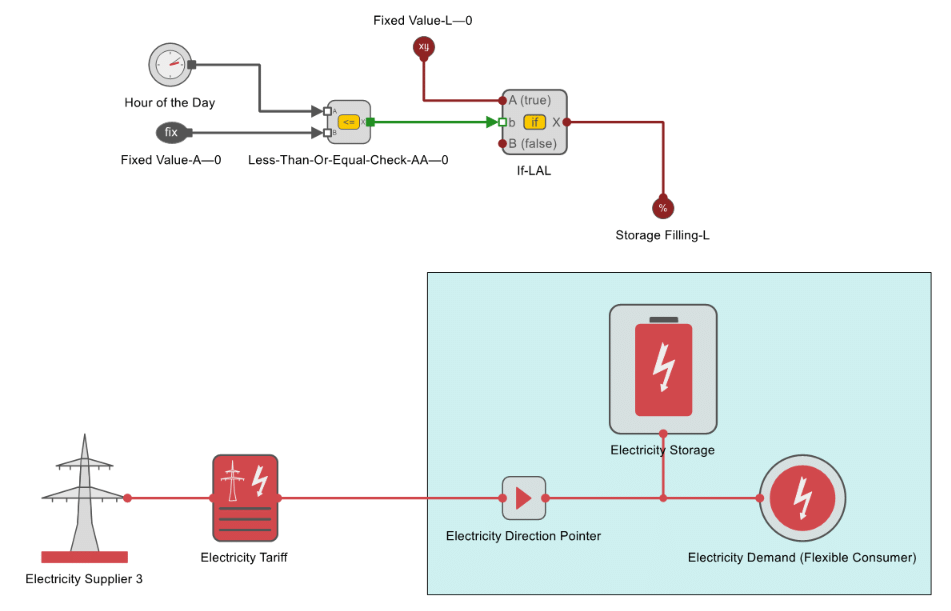
Consumers and storage represent a flexible demand of 100 kWh per calendar day. At 12:00 a.m. each day, the storage level must be 0, i.e., the 100 kWh must have been consumed by 12:00 a.m.
3b) Flexible Consumer—Flexible
Consumers and storage systems represent a flexible demand of 100 kWh/day on average. The timing of consumption can be adjusted.