
Tutorial 08 was created as part of the video series Basic Training. A building’s energy system is expanded to include renewable energy sources. Several variants are created and compared in terms of economic aspects. To this end, a Variant Comparison and a Parameter Study are carried out.
Reference Case
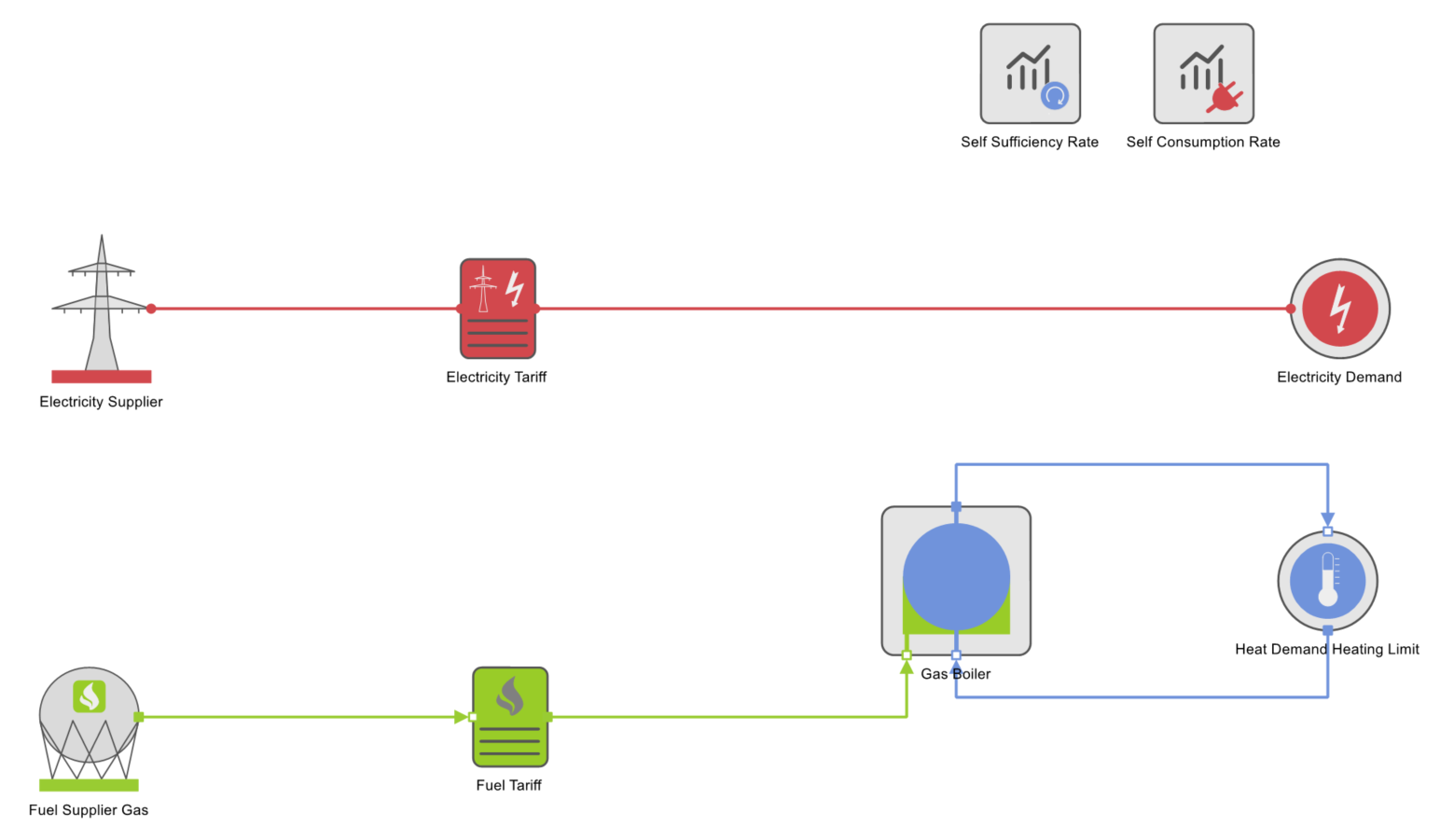
The electricity and heat demand are covered by a hot water boiler and grid supply in the Reference Case.
Variant Photovoltaic (PV)
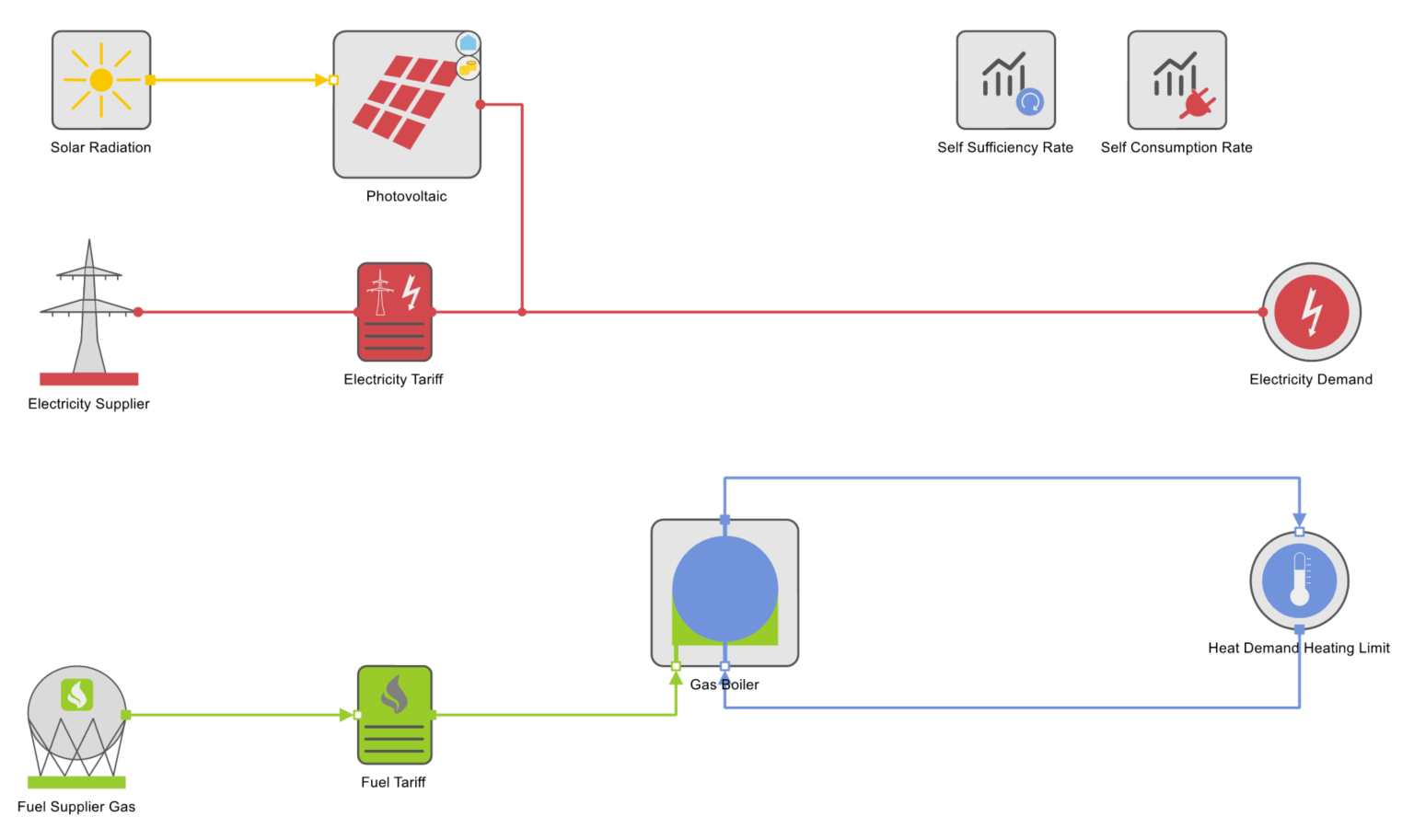
In the Variant Photovoltaic (PV), a Photovoltaic system is added.
Variant PV + Heat Pump (HP)
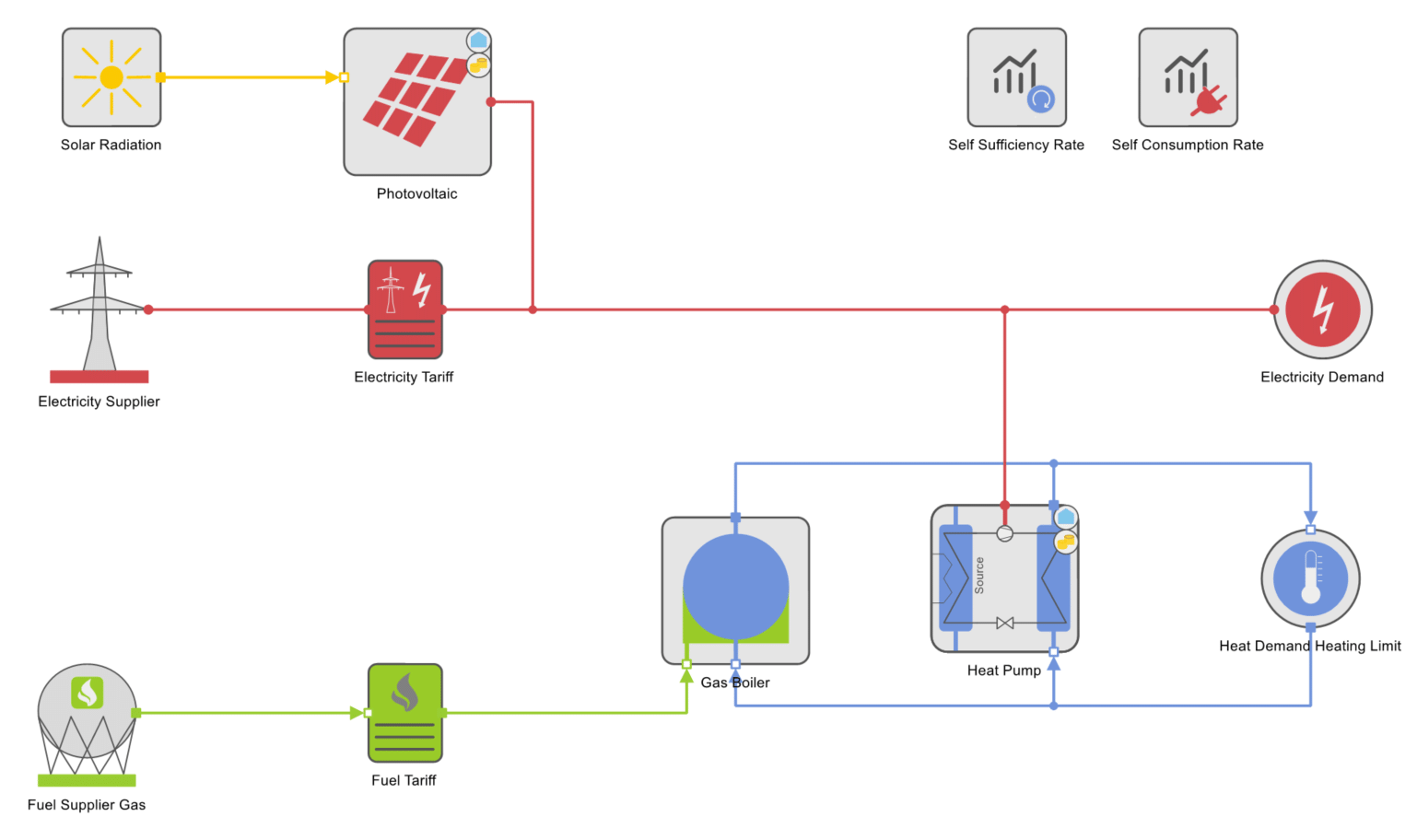
In the second variant, a Heat Pump is added. The power output of the heat pump is simulated depending on the temperature.
Variant PV + HP (Priority)
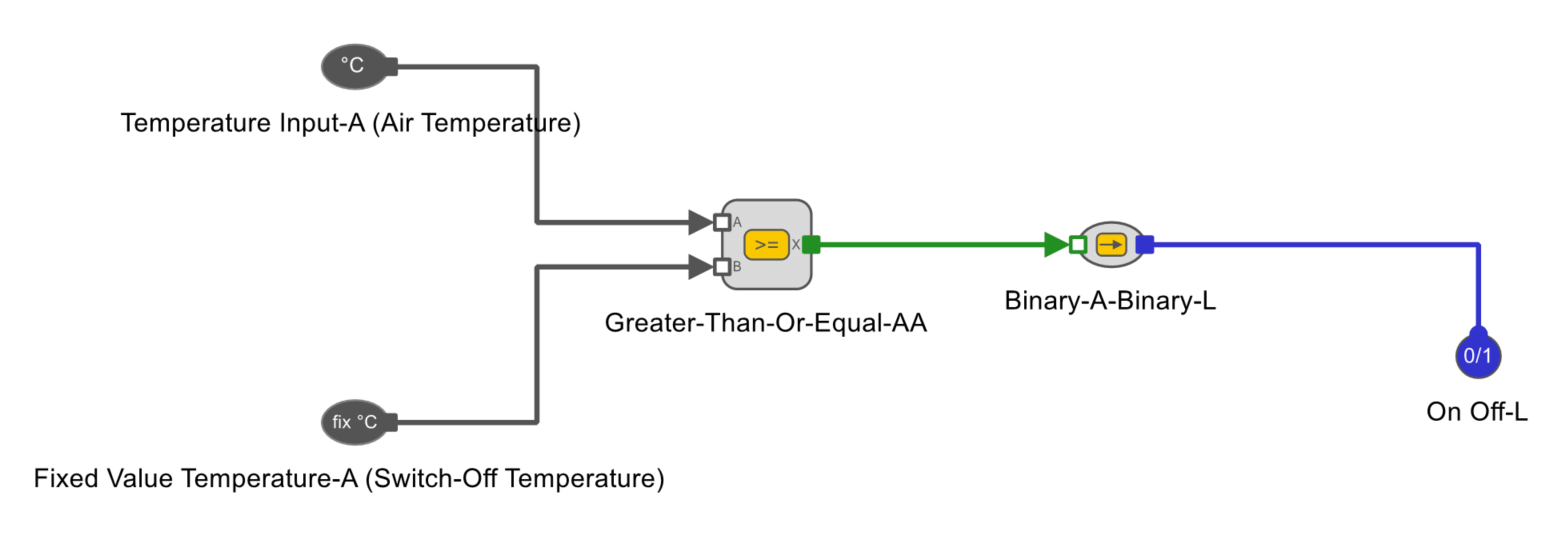
In the third variant, a control system is also implemented, which switches the heat pump on or off when the air temperature falls below or exceeds a fixed temperature (the switch-off temperature).
Variant PV + HP + Battery
In the other variants, a battery is added as a short-term Electricity Storage device. This energy system is simulated once using a switch-on sequence (Priority) and once using a Look-ahead.
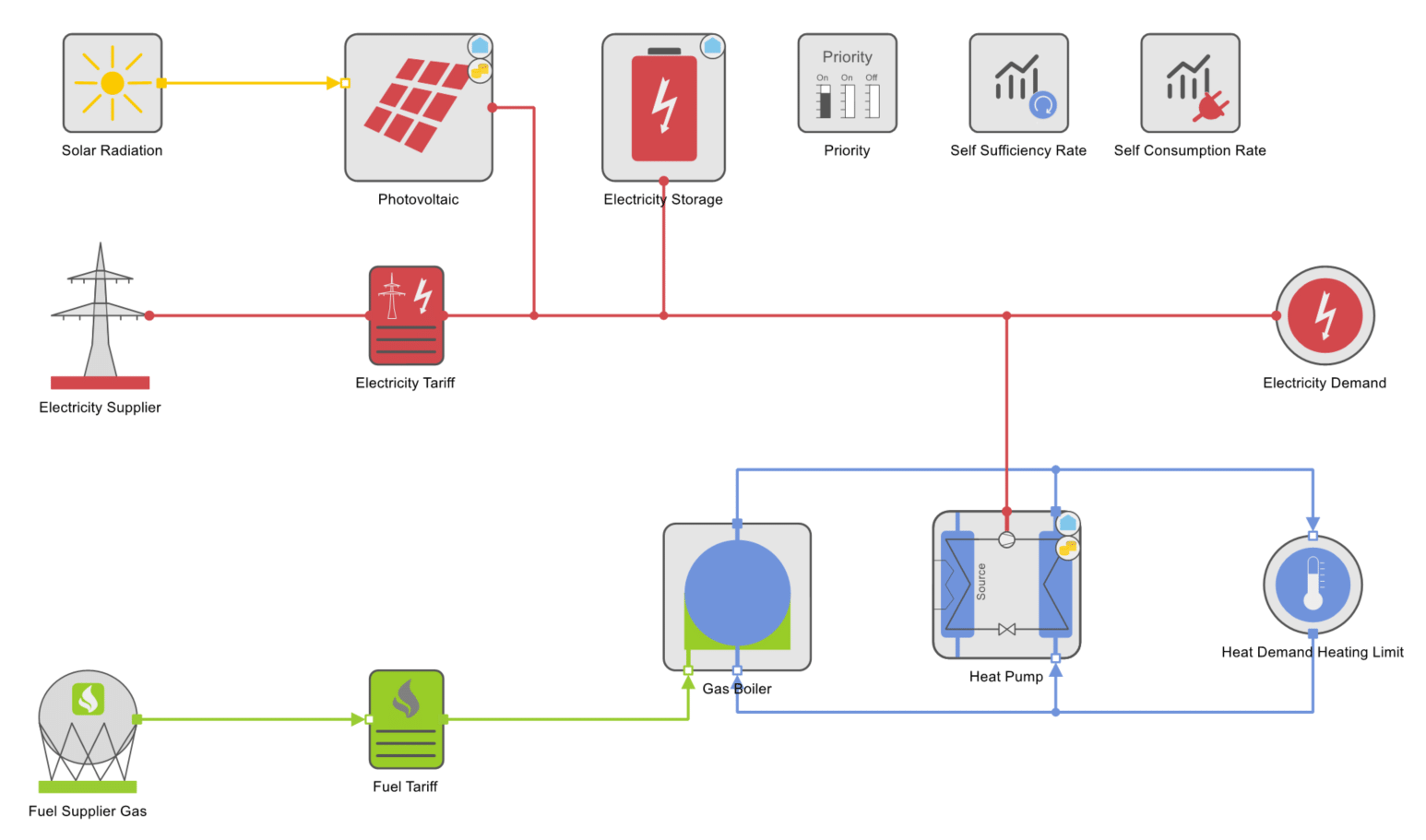
Key Figures
The Self Sufficiency Rate and Self Consumption Rate increase due to the expansion of the energy system.
Variant Comparison
The Variant Comparison compares the profitability data of the variants with that of the Reference Case. With each additional system, CO2 emissions and Cash flow are reduced. The Payback time is less than 10 years in all variants.
Parameter Study
In the Parameter Study, the size of the Photovoltaic system is varied in the variant with an Electricity storage system. The effects on economic indicators and CO2 emission savings are analyzed.

