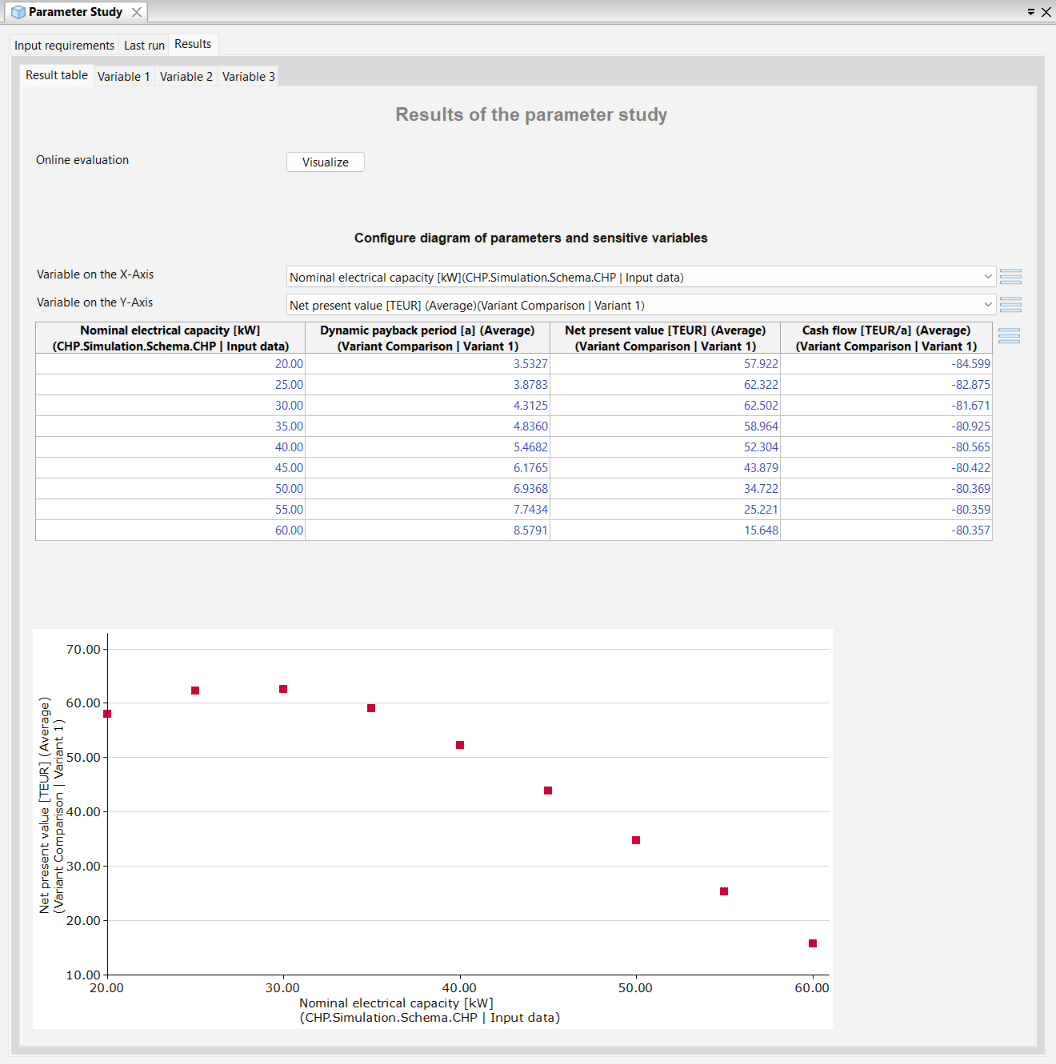
This tutorial shows two possible ways to determine the optimal size of a CHP. The simple possibility is structural optimization (variant 2). The comprehensive option is a sensitivity analysis using the Parameter study module (related to variant 1), which examines the impact of differences in CHP nominal electrical capacity and associated investment costs on Dynamic payback period, Net present value, and Cash flow.
Reference Case
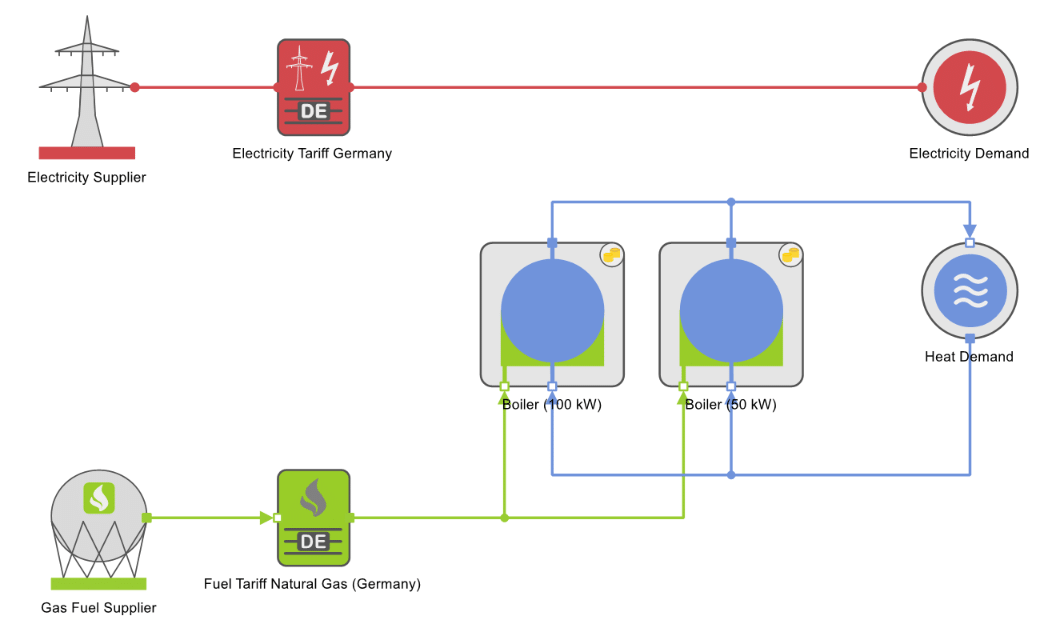
The Scheme corresponds to the Reference Case of Tutorial 05, in which two boilers cover the Heat Demand and an Electricity Supplier covers the Electricity Demand, but the parametrization differs from that in tutorial 05.
Variant 1: CHP
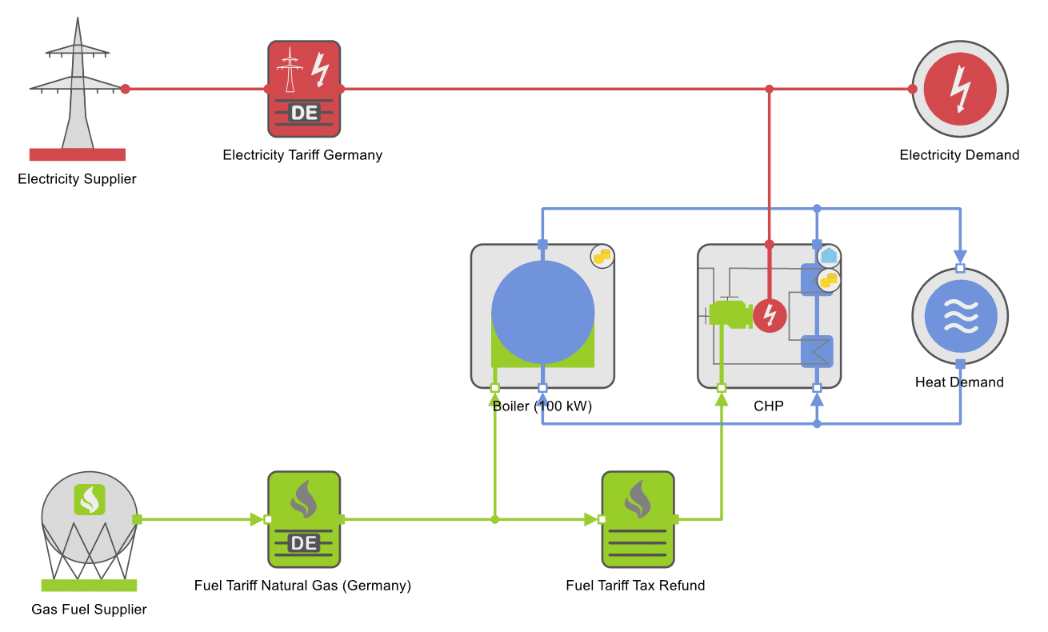
The Scheme resembles that of Tutorial 60, in which a CHP with defined nominal capacity can be operated heat or electricity controlled using the Priority switch-on-sequence component. In this variant of tutorial 72, an emergency cooler is dispensed with because the plant is to be operated heat controlled. The optimal CHP size is determined by a sensitivity analysis in the Parameter study.
Variant 2: CHP – Structural Optimization
In variant 2, the optimal size of a CHP is determined by structural optimization.
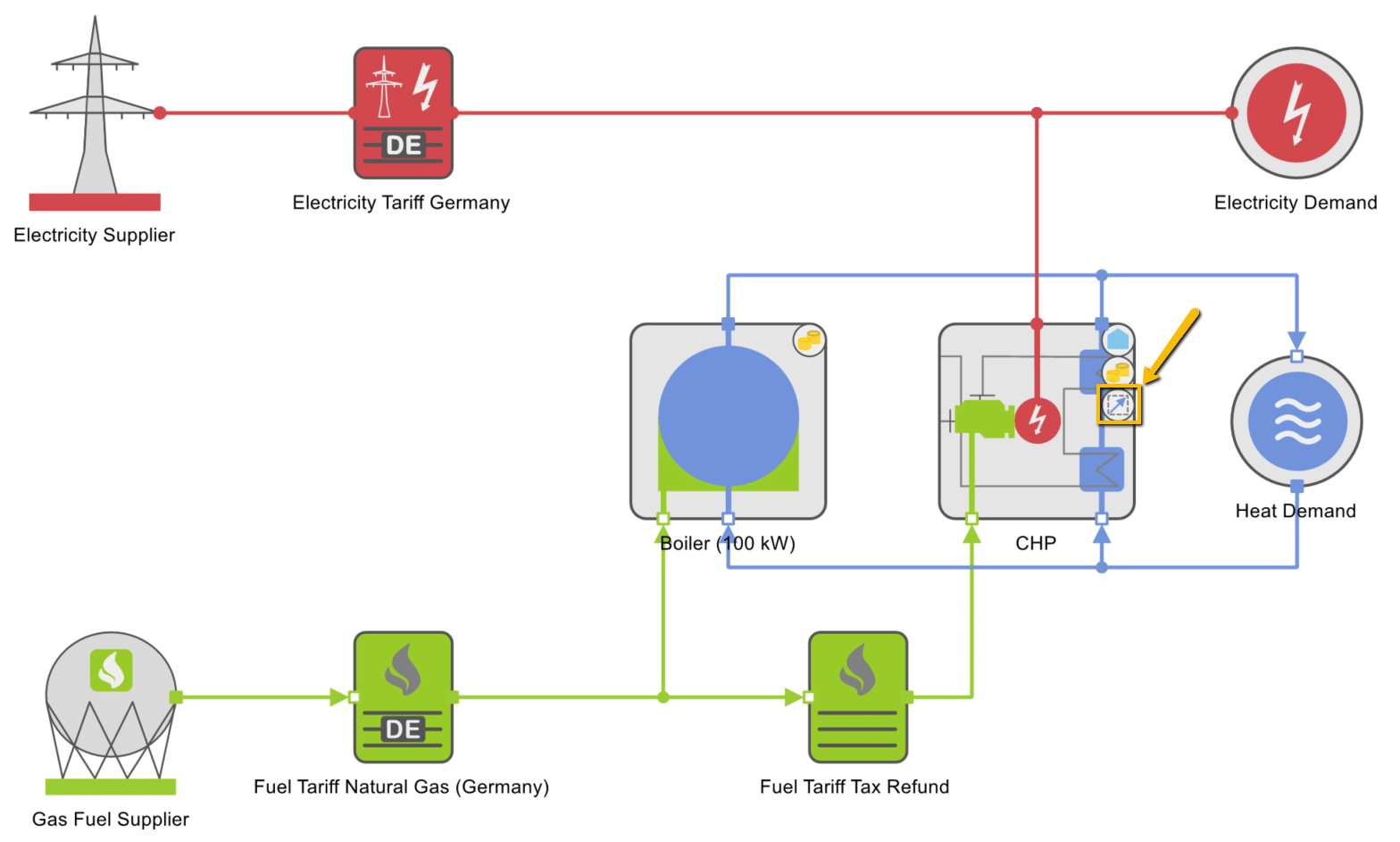

Because nominal power is calculated, you need to specify only the upper and lower limit: Minimum and Maximum electric nominal power. Optimum nominal power of the structurally optimized component, here the CHP, is output in the Technical output data.
If a component is structurally optimized, the group Pre-stage in the Simulation ribbon is activated. For small projects, we recommend selecting the No compression option. This ensures that calculations are performed year-round coupled, and a two-step algorithm is not necessary. For very large projects, structural optimization without a compression level can result in long computation times. Time-series compression can help address this problem, although the results may differ slightly from the actual solution.
Parameter Study
To find out the economically optimal plant design, you can perform a sensitivity analysis using the Parameter study.
In the form Parameter study, specify the parameter to be varied. The Value table is not used in this tutorial, but the Lower and Upper limit and the Number of equally spaced interpolation points in that area (including the limits) are given (see following figure).
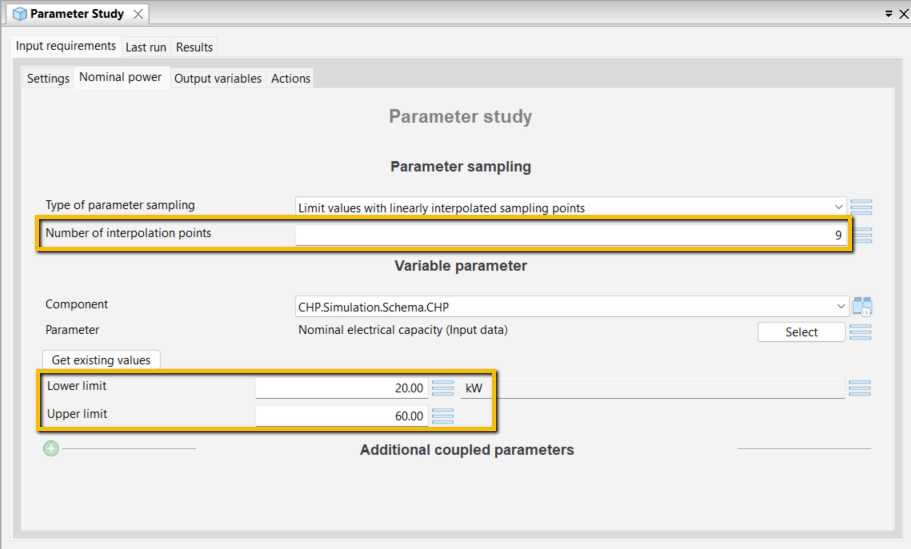
The Parameter study varies the Nominal electrical capacity of the CHP between the given minimal (Lower limit) and maximum value (Upper limit). The value range under consideration here covers the nominal capacity of the CHP between 20 and 60 kW. For each interpolation point, a separate optimization is performed using the given values.
Select the key figures you want to compare in the Output variables (see following figure).
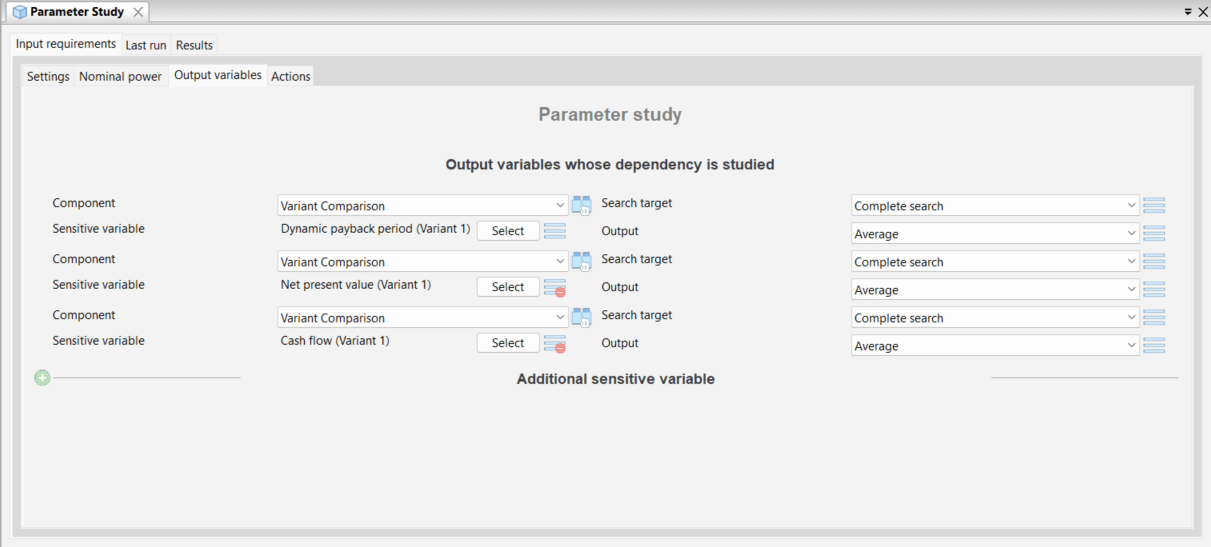
The Specific investment costs of a CHP are 1,9170 TEUR/kW in the tutorial. TOP-Energy calculates the Cash flow, Dynamic payback period, and the Net present value based on this information.
Results
You can visualize the results of the Parameter study directly in TOP-Energy. The Website for variant analysis (https://www.top-energy.de/variantenrechnung) is suitable for sensitivity analyses involving two or more factors. You can upload the CSV file of the Parameter study and visualize it in a varied, multidimensional way.
The results of the sensitivity analysis are output for each variable in the form of the Parameter study in a diagram and a value table (see following figure).